

Make Korean ramyun more satisfying with eggs, kimchi, cheese, scallions, mushrooms, seaweed, dumplings, and spicy finishing touches.
Korean ramyun is bold, spicy, savory, and deeply comforting. It is the kind of food that feels right late at night, on a rainy day, after a long shift, or when you want something warm without spending much time in the kitchen. A packet of ramyun already brings big flavor, but the right toppings can make it even more satisfying.
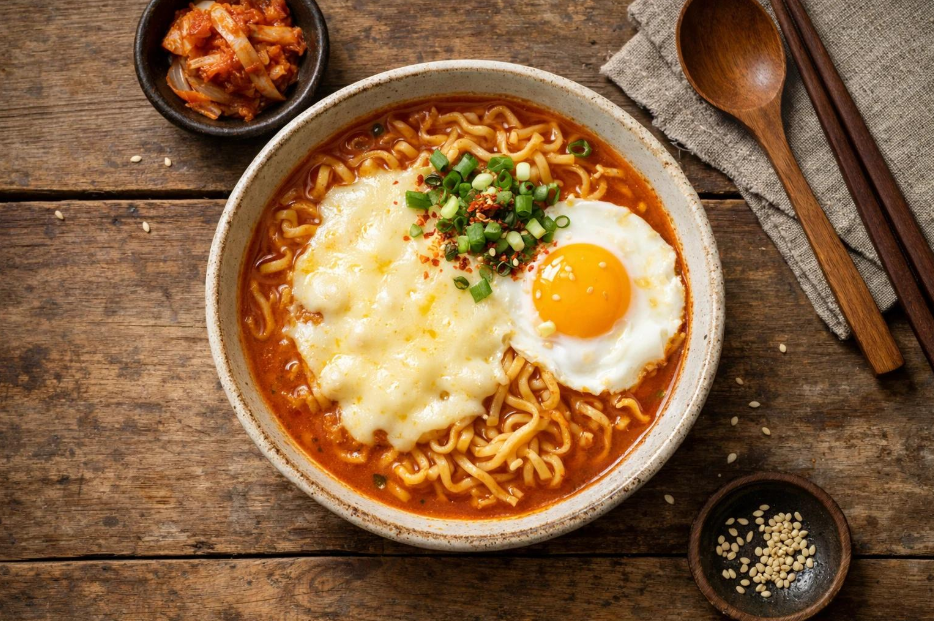
One of the easiest and most classic additions is an egg. You can crack an egg directly into the simmering broth and let it poach gently, or beat the egg and stir it in for soft ribbons. A soft-boiled egg also works beautifully if you want a richer bowl. The yolk softens the heat of the broth and gives the noodles a silky finish.
Scallions are another simple upgrade. They add freshness, color, and a little sharpness that balances the heavy, spicy broth. Add some while the noodles cook, then sprinkle more on top right before serving. The difference is small but noticeable.
Kimchi is one of the best toppings for Korean ramyun because it adds tang, crunch, heat, and depth. Stirring kimchi into the broth makes the flavor brighter and more complex. Placing it on top keeps the texture sharper. Either way, kimchi makes ramyun feel more complete and more connected to Korean comfort food.
Cheese is a popular ramyun addition for a reason. A slice of processed cheese melts into the hot broth and creates a creamy, slightly salty texture that softens the spice. It may sound simple, but it changes the whole mood of the bowl. Cheese works especially well with very spicy ramyun, where it adds comfort and balance.
Mushrooms bring an earthy flavor and a more satisfying bite. Enoki mushrooms cook quickly and look beautiful in the bowl. Shiitake mushrooms add deeper flavor. Button mushrooms or oyster mushrooms also work well. Add them while the broth simmers so they can absorb some of the seasoning.
Seaweed adds a salty, ocean-like note that pairs nicely with spicy broth. You can use roasted seaweed sheets, crushed seaweed snacks, or dried seaweed flakes. Add them at the end so they keep some texture. Sesame seeds also make a good finishing touch, adding a gentle nuttiness.
If you want ramyun to feel more like a full meal, add dumplings, tofu, fish cakes, sliced meat, or leftover vegetables. Frozen dumplings can cook directly in the broth before the noodles go in. Tofu adds softness and protein. Leafy greens such as bok choy, spinach, or napa cabbage add freshness and make the bowl feel less heavy.
For extra heat, add gochugaru, chili oil, or chili crisp. For more depth, add a small spoonful of gochujang. For a slightly richer broth, try a splash of milk or a small knob of butter. These additions are not necessary every time, but they can help you shape the bowl depending on your mood.
A good ramyun bowl is about contrast. The broth is spicy, so creamy or fresh toppings help balance it. The noodles are soft and springy, so crunchy kimchi or scallions add texture. The flavor is bold, so eggs, cheese, mushrooms, or greens can make it feel rounder.
Korean ramyun is flexible because it welcomes small improvisations. You can keep it simple with egg and scallions, make it creamy with cheese, make it tangy with kimchi, or turn it into a fuller meal with dumplings and vegetables. However you build it, the goal is the same: a hot, comforting bowl that feels easy, bold, and deeply satisfying.
Noodles, Asian comfort food, and everyday food culture.
Join Noodlious,get noodle ideas, pantry tips, and Asian food stories in your inbox.