

Build a better ramen bowl at home with warm broth, springy noodles, cozy toppings, and simple finishing touches.
A good ramen bowl does not need to be complicated. It needs balance. The best bowls bring together warm broth, springy noodles, satisfying toppings, and a few small finishing touches that make everything feel complete. Whether you are starting with fresh noodles, instant noodles, or a simple homemade soup base, you can build a better ramen bowl at home with a little attention to flavor, texture, and temperature.
Start with the broth. Broth sets the mood of the bowl. It can be light and clear, rich and creamy, spicy and bold, or mellow and savory. If you are using an instant soup base, you can still improve it with pantry ingredients. A spoonful of miso adds body and depth. Soy sauce brings saltiness and umami. Sesame oil adds warmth. Chili oil creates heat and color. A small splash of rice vinegar can brighten a broth that tastes too heavy.
If you want a richer bowl, try adding a little milk, unsweetened soy milk, tahini, sesame paste, or a small piece of butter. These ingredients can soften the saltiness of the broth and make the texture feel rounder. For a cleaner bowl, keep the broth simple and add freshness with scallions, greens, mushrooms, or citrus.
Noodles matter too. Ramen is not only about flavor; it is also about texture. Springy noodles give the bowl energy. Softer noodles feel more comforting. Thin noodles work well with lighter broths, while thicker noodles can stand up to richer sauces and heavier toppings. Cook the noodles just until tender, then serve them quickly so they keep their texture.
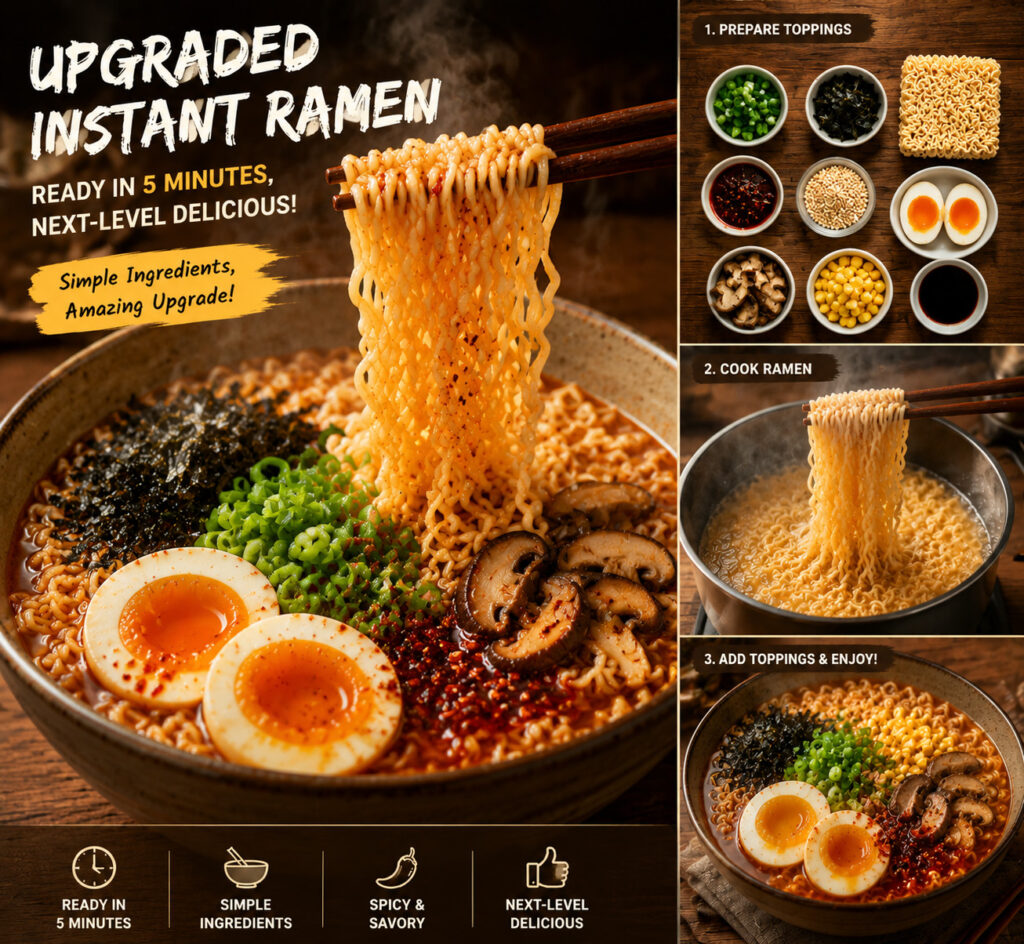
Toppings are where ramen becomes personal. A soft-boiled egg is classic because it adds richness and makes the bowl feel complete. Scallions bring freshness. Mushrooms add depth. Corn adds sweetness. Nori adds a sea-salty note. Greens such as bok choy, spinach, or napa cabbage bring color and balance. Tofu, sliced chicken, pork, dumplings, or leftover vegetables can turn a simple bowl into a full meal.
Think about contrast when choosing toppings. If the broth is rich, add something fresh. If the noodles are soft, add something crisp. If the bowl is mild, add chili oil, black pepper, kimchi, or pickled vegetables. A good ramen bowl is not just one flavor; it has layers.
Finishing touches make a bigger difference than most people expect. Toasted sesame seeds, garlic oil, chili crisp, sliced scallions, crushed nori, fried shallots, or a small drizzle of sesame oil can make a bowl feel polished. These details add aroma right before eating, which makes the ramen feel warmer and more inviting.
One of the easiest home ramen combinations is a miso sesame bowl. Start with a simple broth, stir in miso and a little sesame paste, then add noodles, a soft egg, corn, scallions, and chili oil. Another easy option is a spicy chili oil ramen with mushrooms, greens, scallions, and sesame seeds. For something lighter, use a soy-based broth with bok choy, tofu, nori, and a soft-boiled egg.
Ramen is flexible, so it does not need to follow strict rules every time. Some days, a quick bowl with egg and scallions is enough. Other days, you might want mushrooms, greens, chili oil, and a richer broth. The goal is not perfection. The goal is a bowl that feels warm, balanced, and satisfying.
Once you understand the basic structure, ramen becomes easy to adapt: broth, noodles, toppings, and finish. Keep a few staples at home, pay attention to texture, and let the bowl match your mood. A better ramen bowl is often only a few small choices away.
Noodles, Asian comfort food, and everyday food culture.
Join Noodlious,get noodle ideas, pantry tips, and Asian food stories in your inbox.