
Explore Chinese noodles through comforting bowls, bold sauces, chewy textures, and classic ideas like dan dan noodles, scallion oil noodles, and beef noodle soup.
Chinese noodles are not one single dish. They are a whole world of textures, sauces, broths, regions, and everyday comfort. Some bowls are spicy and numbing, some are fragrant with scallion oil, some are served in rich beef broth, and others are tossed simply with sesame paste or soy sauce. What they often share is a sense of warmth, movement, and deep satisfaction.
For beginners, the easiest way to understand Chinese noodles is to think about three things: the noodle, the sauce or broth, and the toppings. Each part changes the feeling of the bowl.
The noodles themselves can be thin, wide, round, flat, chewy, soft, hand-pulled, knife-cut, wheat-based, rice-based, or egg-based. Wheat noodles are common in many northern and western Chinese noodle dishes, where chewy texture is especially important. Rice noodles are often lighter and softer, showing up in soups, stir-fries, and regional dishes across southern China and beyond.
Sauces are where many Chinese noodle dishes become unforgettable. Scallion oil noodles are a beautiful example of simplicity. Scallions are slowly cooked in oil until fragrant, then mixed with soy sauce and tossed through noodles. The result is savory, aromatic, and comforting without needing many ingredients.
Dan dan noodles show a different side of Chinese noodle cooking. They are bold, spicy, nutty, and layered. A good dan dan-style bowl might include chili oil, sesame paste, soy sauce, vinegar, Sichuan pepper, minced topping, and scallions. The flavor is deep and lively, with heat, richness, and a slight tang that keeps each bite interesting.
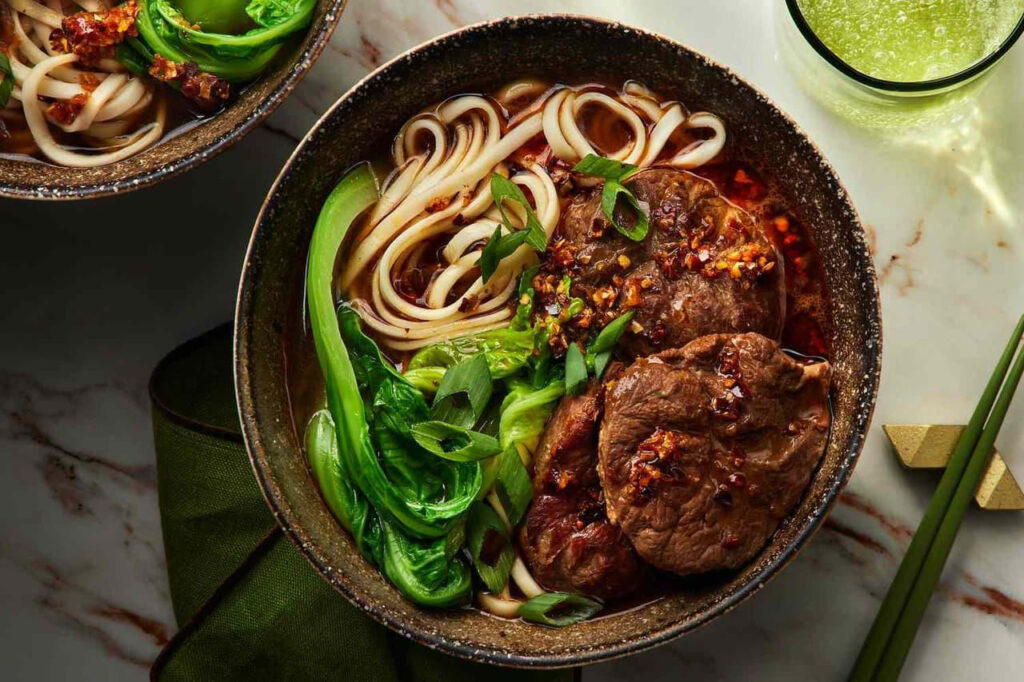
Beef noodle soup is another classic direction. It is warm, hearty, and deeply comforting. The broth is often built with beef, aromatics, soy sauce, spices, and time. The noodles carry the broth, while greens, scallions, and tender beef make the bowl feel complete. It is the kind of dish that feels both filling and soothing.
There are also many dry or tossed noodle styles that work beautifully at home. Noodles can be mixed with sesame paste, chili crisp, black vinegar, soy sauce, garlic, ginger, scallions, or peanut sauce. These bowls are often quick to prepare and easy to adjust. If the sauce feels too thick, loosen it with a little hot noodle water. If it tastes too salty, add vinegar or a touch of sweetness. If it needs more depth, add chili oil or sesame oil.
Toppings bring texture and balance. Scallions are almost always welcome. Cucumber adds freshness. Bok choy or leafy greens bring color. Sesame seeds add nuttiness. Fried eggs add richness. Pickled vegetables add brightness. Minced mushrooms, tofu, pork, beef, or chicken can make the bowl more substantial.
One reason Chinese noodles are so appealing is that they can be humble and expressive at the same time. A simple bowl of scallion oil noodles can be made with pantry basics, while a bowl of spicy noodles can feel bold and restaurant-worthy. Both can be comforting in different ways.
If you are building a Chinese noodle pantry, start with soy sauce, dark soy sauce, sesame oil, chili crisp, black vinegar, sesame paste, dried noodles, scallions, garlic, ginger, and sesame seeds. With those ingredients, you can create many simple noodle bowls without needing a complicated recipe.
Chinese noodles are also deeply tied to everyday life. They can be breakfast, lunch, dinner, a late-night meal, or a quick bowl between busy moments. They are practical, flavorful, and endlessly adaptable. For anyone beginning to explore Asian noodles, Chinese noodle bowls offer one of the richest places to start.
Noodles, Asian comfort food, and everyday food culture.
Join Noodlious,get noodle ideas, pantry tips, and Asian food stories in your inbox.